
Inside Natasha Landers’ Walthamstow home, art is not separated from everyday life. It lives among music, colour, furniture, family memories and conversation. Visitors can sit, talk, meet the artists and imagine the work within their own homes.
Nathan Gabbidon sat down with Natasha, founder of The Lemon Seed Project, to discuss why she opened her home as a gallery, the importance of championing Black artists and the forthcoming Framed in Black exhibition celebrating the Black British experience.
This interview has been edited for length and clarity.
Q: How did The Lemon Seed Project begin?
A: I have always collected Black art. Growing up, I rarely saw images in galleries, books or films that looked like me. The place where I did see them was in my parents’ home because they collected art.
When I began buying for myself, I was very intentional. I wanted portraiture and figurative art that reflected me and the people around me.
One of the artists I collected, Stephen Anthony Davids, asked whether I could help him organise a studio sale. I was already opening my home as part of the Open House Festival, so I invited him to bring his work here. We held a private view and opened for two Saturdays. The response was incredible, and we sold original pieces as well as work painted on found objects.
That made us realise the idea could really work. The Lemon Seed Project grew from there. I often describe it as my love letter to Black artists because they are not always given the love, recognition or space they deserve.

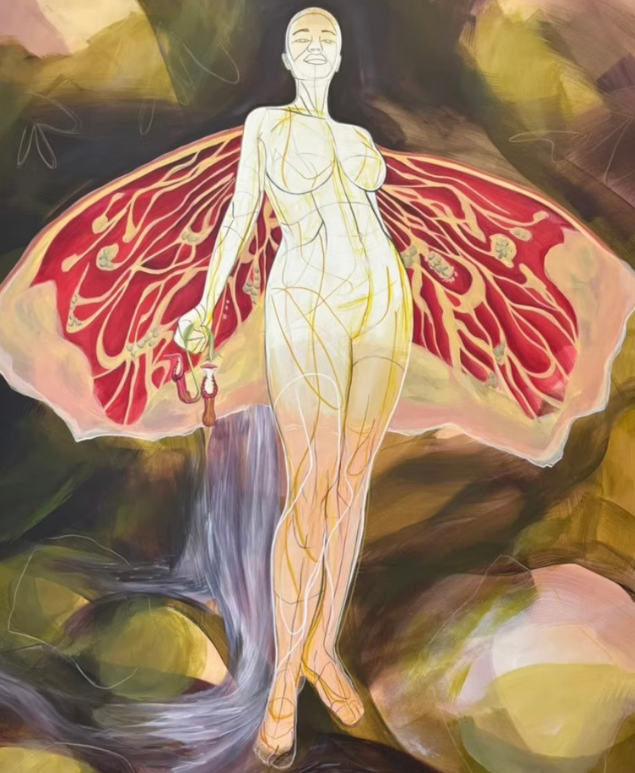
Q: Why did you choose to create a gallery inside your home?
A: Traditional white-box galleries can feel intimidating, particularly to people who are not used to visiting them. They can be very quiet, and there are unwritten rules about how you should walk around, behave or speak. Even the language used by the art world can feel inaccessible.
A home changes that experience immediately. People come in and feel comfortable. They can sit down, listen to music, talk about the work and meet the artists. In the summer, I open the doors to the garden, and sometimes people become so relaxed that they do not want to leave!
The art is displayed in a lived environment, so visitors can imagine how it might look in their own homes. You do not need a mansion or enormous white walls to collect art. This is an ordinary home filled with pieces of different sizes, styles and price points.
Q: The house feels like a living installation. Is that intentional?
A: Completely. I am an interior designer and a creative, so I curate my home. Every part of the room contributes to its story. There should never be a forgotten corner simply because people are passing through it.
I am also rebellious when it comes to design. People say ceilings should be white or that art must be framed and hung in a particular way. I do not believe that. We have displayed work using bulldog clips and wire, in front of windows, on floors and on windowsills. I even have art in the bathroom.
The copper lighting in the kitchen was inspired by the movement of the London Underground map. Plants now grow around it, so it continues to change and evolve. That reflects the wider space: this is a living exhibition, but it is also still my home.

Q: What guides the art you personally collect?
A: I have to feel drawn to it. Art is subjective, but my collection is also a political statement. Around 99 per cent of my art is by Black artists. When a piece is created by a non-Black artist, it will usually feature Black portraiture.
I want to support Black artists, but I also buy the work because I love it. Every piece has its own story. Sometimes I buy something believing I know exactly where it will go, but when I bring it home, the art tells me it belongs somewhere else.
Art communicates with the room and with the pieces around it. That is why I am always moving things and creating new conversations between the work.
Q: How do you decide which artists to exhibit?
A: There must be something in the work that draws us in—a level of technical skill, originality or a powerful story. That does not mean the artist needs to have trained formally or worked for many years. Someone can be a new artist and still have extraordinary raw ability.
I also look for artists doing something distinctive rather than trying to reproduce what somebody else has already done. We discover artists through social media, exhibitions, recommendations and craft fairs. Artists must start somewhere, and craft fairs can be wonderful places to discover original work while it is still affordable.
We also accept submissions for group exhibitions. The important thing is that the work makes us feel something and that we believe other people will connect with it too.
Q: Why is it still important to speak specifically about Black artists?
A: There is a debate about whether we should call somebody a Black artist rather than simply an artist. But the reality is that racism and gatekeeping still exist in the art world.
Some galleries may represent one Black artist and feel they have done enough. But one artist cannot represent Black photography, painting, sculpture, abstraction, landscapes and every other creative form.
I also believe Black British artists do not receive enough recognition. Attention often goes towards African or African-American artists, while the particular experiences and contributions of Black British artists can be overlooked. Naming that imbalance allows us to challenge it.
Q: Tell us about the Black History Month exhibition, Framed in Black.
A: Framed in Black is our first full group exhibition and is being co-curated with Art For Hours. It explores the richness, complexity and diversity of the Black British experience through painting, photography, sculpture and other forms.
We received more than 108 submissions and selected around 25 artists. It was difficult because the standard of work was so high, although the four of us reviewing the submissions agreed on many of the strongest pieces.
The exhibition is not suggesting that Black history belongs to one month. We know it should be recognised throughout the year. But Black History Month gives us an opportunity to bring people together and create space for these stories.
Q: What does the Black British experience mean to you?
A: It comes from being connected to Africa or the Caribbean while also being born or raised here and navigating those different worlds.
We are not denying our African or Caribbean heritage. The Black British experience exists because of those roots, but something distinctive has also grown here through culture, language, music, politics and community life.
Lovers Rock is part of the Black British experience. So are reggae’s development in Britain, garage music and the impact Black British communities have made across sport, fashion, art and culture.
There are many layers and nuances within the diaspora. Those stories are valuable, and they deserve to be recognised, recorded and shared.
Q: Music also seems to be an important part of experiencing the gallery.
A: There is always music here. Sometimes the exhibiting artist creates the playlist, and sometimes we curate it for them. For me, there will often be Fela Kuti playing somewhere in the background.
Sound is deeply connected to Black culture and the wider diaspora. It helps us communicate our feelings, connect with memory and ground ourselves. Music can bring joy, but it can also hold grief, protest and healing.
That is another difference between this space and a silent gallery. Here, art is experienced alongside sound, conversation and life.
Q: Where did the name The Lemon Seed Project come from?
A: My original brand is called Until Lemons R Sweet. The name was inspired by a Black spoken-word artist describing how she would love her partner until lemons became sweet—in other words, forever.
That connected with how I feel about creativity. It never stops; it is always evolving.
The Lemon Seed Project came afterwards. The seed represents what we want to do for artists: help something germinate, support it as it grows and allow it to develop into new opportunities. We introduce artists to collectors, curators, gallerists, buyers and the press because visibility is important, but artists also need to sell their work and build sustainable careers.
Q: What do you hope people take away from visiting?
A: I want people to understand that art is for them. You do not need specialist knowledge, and there is no correct way to experience it.
Come in, look around, sit down, have a conversation and meet the artist. If you connect with something, you may even decide to take it home.
The gallery is about making art accessible, but it is also about building networks and creating opportunities for Black artists. It is a place where people and ideas can meet, grow and travel beyond these walls.
Natasha’s work reminds us that leadership does not always begin in an institution or behind an official title. Sometimes it begins with a personal collection, a bold idea and the decision to open your front door.
FRAMED IN BLACK
A Black History Month group exhibition exploring the richness, complexity and diversity of the Black British experience.
Presented by: The Lemon Seed Project and Art For Hours
Location: The Lemon Seed Project’s home gallery, Walthamstow
Public openings: Saturday 24 and Saturday 31 October 2026
Visit www.lemonseedproject.com for exhibition information.
Afiwe editorial note
Afiwe provides space for community voices, interviews, commentary and lived experience. Views and opinions expressed by interviewees and contributors are their own and do not necessarily represent the views of Afiwe, its publishers, partners or funders. Afiwe aims to distinguish clearly between opinion and verified fact and to provide appropriate context where matters are contested, developing or subject to ongoing proceedings.

