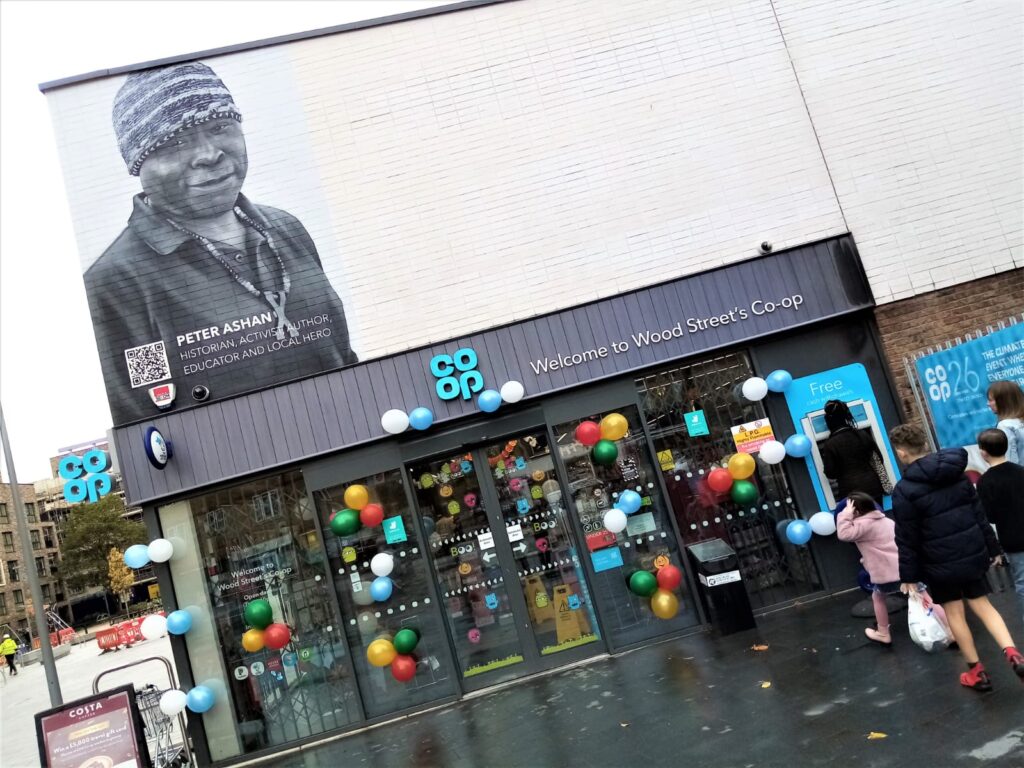
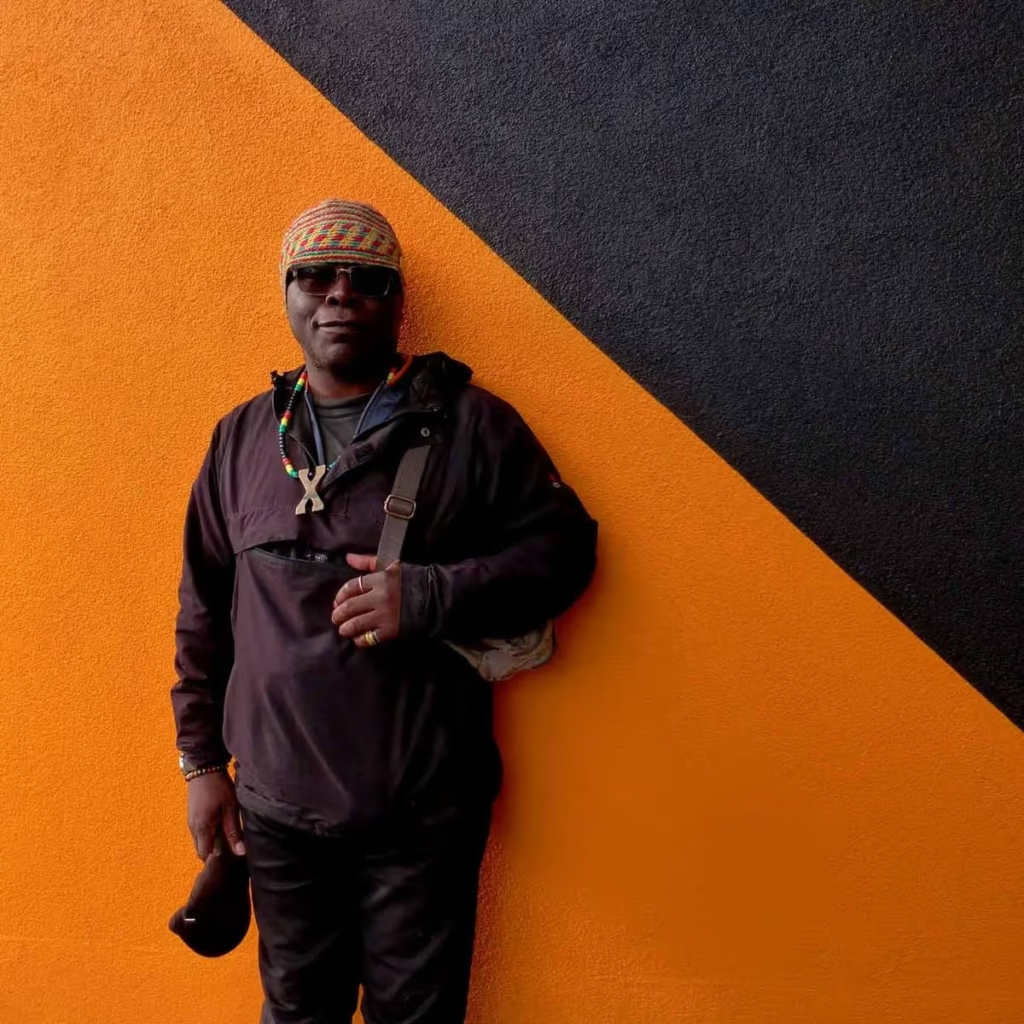
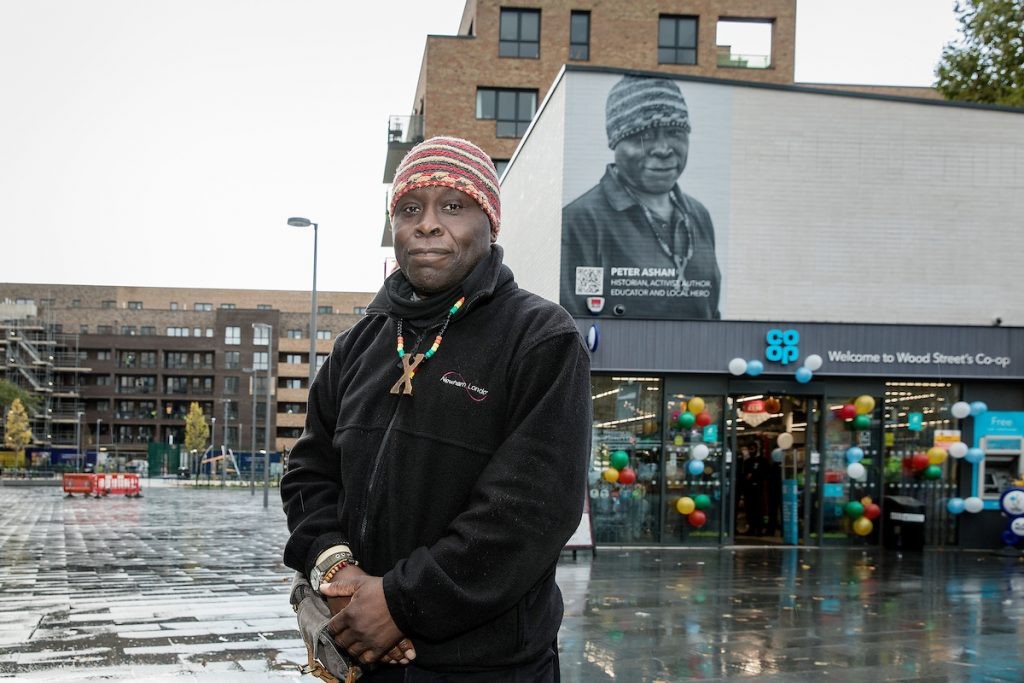
For almost two decades, educator and local historian Peter Ashan has helped residents see Waltham Forest differently — revealing stories of Black presence, migration, resistance and community contribution in the streets around us.
Born in Hackney to Barbadian parents and raised in Leyton, Peter has spent much of his professional life asking how education can challenge inequality and make overlooked histories visible.
His history walks have taken people through Leyton, Leytonstone, Walthamstow and Chingford, uncovering stories that range from world heavyweight champion Jack Johnson training in Epping Forest to local carnival pioneers, faith leaders, abolitionists and Black residents whose presence in the area stretches back centuries.
For Peter, local history is not simply about looking backwards. It is about understanding who belongs, recognising whose contribution has been overlooked and giving another generation the confidence to shape the places in which they live.
Interview by Nathan Gabbidon at the African Caribbean Women’s Development Centre, Leyton
From “Little Peter” to local historian
AFIWE: Peter, how did “Little Peter” become “Big Peter”?
PETER ASHAN: I’m still Little Peter — I’ve always been small! My parents came from Barbados around 1960, and I was born in Hackney. We moved around a bit and eventually ended up in Leyton, so I grew up here and went to school locally. As an adult, I moved to Leytonstone.
I’ve been in the borough a long time, so I know it very, very well.
I became an educator and qualified as a lecturer in post-16 education and training. I worked in colleges, adult education, museums and galleries.
I recognised inequality and institutional racism from when I was at school and I thought: what could I practically do, using the skills I had as an educator, to change that?
Within education Peter was always teaching about Black history and Black culture. Looking at the local community became a practical way of showing how history lives close to home — in familiar streets, institutions and community spaces.
“We talk internationally about people, but many people probably don’t know what our diverse, multi-faith community has done locally.”
Taking history out of the classroom
Peter began speaking with residents and community organisations he already knew, gathering histories and bringing them into the walks.
That research eventually became his first book, Remembering Slavery and Its Legacy, 1807–2007: Roots of Diversity in Waltham Forest, published in 2007 during the bicentenary of the abolition of the British slave trade.
AFIWE: Did the book come out of the walks?
PETER ASHAN: Yes. I developed walks in Leyton, Leytonstone, Walthamstow and Chingford and thought I could bring them together in an accessible book that people could carry around.
It could also be useful in schools, libraries and education.
The book looked at the multi-ethnic, multi-faith community from around the period of the transatlantic slave trade through to what was then the present day.
I focused particularly on the African Caribbean community while also looking at other communities and faiths.
The walks and the book are really about making those histories visible.
Has enough changed?
AFIWE: When you began the walks, what did you hope they would achieve? Have they met your expectations?
PETER ASHAN: No, it hasn’t satisfied my expectations, because we are still seeing a great deal of inequality and discrimination across life, including within education and against many different communities. We know about the Black Lives Matter movement. We know about the recent tragedy of Jason Arday. In my opinion, what happened around Jason’s case raises serious questions about discrimination and inequality within education at all levels – even at Cambridge level.
So I know personally that what I have done isn’t enough.
But there has been progress.
I started the walks on my own. I would approach community groups and say, ‘I’m doing a walk.’ Then the council began supporting and funding walks in schools and within the community for Black History Month, Windrush Day and other occasions.
Funding is much more limited now, but the walks themselves have grown. I’ve been able to lead walks outside Waltham Forest as well – in places including Forest Gate, Battersea, Whitechapel, Ridley Road and Hackney.
And now people come to me and say, ‘Peter, can you do a walk for us?’ That is quite different from always having to approach people myself.
Editor’s note: Professor Jason Arday died in August 2026 following a period of intense scrutiny surrounding his work and appointment at the University of Cambridge. Cambridge has since launched an independent review examining the University’s support for Professor Arday and wider institutional processes relating to his appointment and time at the University. The review is ongoing at the time of publication. The views expressed above are Peter Ashan’s own.
Peter explains that the work is not-for-profit. Any money he receives is directed towards organisations working around equality. He is also fundraising for heritage plaques recognising Black people who have made important contributions.
Jack Johnson in Chingford
One of the stories Peter is working to commemorate is that of Jack Johnson, the first Black world heavyweight boxing champion.
AFIWE: What does Jack Johnson have to do with Chingford?
PETER ASHAN: He came to Chingford in 1911 and stayed at the Royal Forest Hotel. His training camp was in Epping Forest and he was preparing for a proposed heavyweight fight against Bombardier Billy Wells.
The fight didn’t go ahead, but Jack Johnson was here, in Chingford, preparing for it.
I think it is really important that people are aware of that and recognise its importance locally.
The plaque is one way of showing the contribution Black people have made — and continue to make — in so many different walks of life.
For Peter, stories like this challenge the idea that Black history sits outside British history. It happened here, in places many residents pass every day.
“Migration is a very normal thing”
The conversation naturally turns from local history to migration — and to the hostile language that can surround it.
AFIWE: We sometimes speak about migration as though it is something unusual, but people have always moved, travelled and created new communities.
PETER ASHAN: That is how human beings populated the world: through migration. Humanity came from Africa and moved out to populate other parts of the world. Migration is a very normal thing.
Ideally, it should be a wonderful thing. People should migrate because they want to see the world, explore it and meet other people.
Unfortunately, people often have to migrate because of oppression or poverty. The Jewish community, for example, was forced to migrate because of persecution — from antisemitism in the Russian Empire in the nineteenth century to the Nazis during the 1930s.
Migration is nothing unusual. It is perfectly natural.
We should welcome people and be more human rather than scapegoating and blaming people. We should work together to solve the problems that exist in the world.
“Migration is nothing unusual. It is perfectly natural.”
History beneath our feet
For Peter, walking is important because it takes history out of textbooks and puts people directly into the places where events happened.
PETER ASHAN: Sitting in a classroom is fine. There’s nothing wrong with that — we need to do it. But for me, one of the best ways to learn is to be out in the community, engaging with the community. You learn so much by doing that, and it brings people together brilliantly.
Among the people Peter highlights is Lawrence Noel, a Leytonstone resident and carnival pioneer involved in the development of Notting Hill Carnival, including mas bands, masquerades, costumes and steel pans.
He also points to Pastor Io Smith, who helped establish the New Testament Assembly Church and worked to alleviate poverty in the borough.
PETER ASHAN: The walks allow people to discover what these people did and, hopefully, begin asking: what can I do?
Black history in Waltham Forest didn’t begin with Windrush
One misconception Peter particularly wants to challenge is the idea that Black presence in the borough began after the Second World War.
PETER ASHAN: Many people think Black people only arrived here during the Windrush era. But Asian and African people were living and working in what was then Essex and is now Waltham Forest much earlier. Black people have been present in this area since at least the seventeenth century.
It is tragic that some African people in the seventeenth and eighteenth centuries came here as enslaved people. But we also need to learn about their lives, humanise them and understand the struggles against enslavement. White people were involved in those struggles as well.
We want to tell the whole story.
“We want to tell the whole story.”
That phrase is perhaps the clearest explanation of Peter’s approach. History is rarely simple. There are people who resisted injustice and others who benefited from it. There are imperfect people who nevertheless made courageous choices. There are connections between local streets and much larger global histories.
Pioneers, abolition and the courage to act
Peter points to local connections with people who challenged enslavement and inequality, including Mary Fletcher, associated with the Methodist movement in Leytonstone.
PETER ASHAN: Her father benefited from the slave trade and owned plantations, but she wanted to devote her own life to God and opposed those things. She married a Methodist clergyman who also spoke out against the slave trade, and she established an orphanage and training centre for girls and women in Leytonstone.
It is important to understand these pioneers. They were not perfect people, but they wanted to challenge oppression happening in the world and found ways to do that. This isn’t new. People have been doing this for decades and decades, and we need to remember it.
AFIWE: And be brave.
PETER ASHAN: And be brave, yes. It isn’t easy, but it is okay to be brave and challenge oppression.
The extraordinary story of Princess Aina
Another history Peter brings into his walks is that of Princess Aina Sarah Forbes Bonetta Davies.
PETER ASHAN: She came to Leytonstone around the 1860s to meet the Buxton family. She was a refugee and an orphan. She was brought to this country, met Queen Victoria and became the Queen’s ward and goddaughter.
It is an extraordinary story. Here was a refugee and orphan who came to this country and was able to live a very different life.
Again, there are things about the people and institutions involved that we can criticise. Nobody is perfect. But we should also recognise the humane actions people took and what those actions meant for an individual life.
Who comes on the walks?
AFIWE: Who takes part in the walks?
PETER ASHAN: All kinds of people come. Sometimes a school asks me to deliver a walk, so you have the pupils and their teachers. Sometimes it is a community organisation.
The people who come tend to be interested in learning more about how this multi-faith, multi-ethnic community was formed and created.
Walking through the area and discovering these histories can change the way familiar streets are understood.
What can people do now?
History, for Peter, has little purpose if it leaves people feeling that they can do nothing about the present.
AFIWE: If somebody in Waltham Forest reads this and wants to help challenge racism, discrimination or hostility today, where could they start?
PETER ASHAN: There are many positive things happening through different organisations.
One organisation people could contact is Waltham Forest CVS, which brings together voluntary and community organisations providing support and assistance.
There is also Leytonstone Against Racism, which does good work bringing communities together and challenging inequality, discrimination and hate.
Waltham Forest Migrant Action provides support as well.
People can also speak to the council or ask at their local library. There are lots of ways people can receive support in Waltham Forest — and lots of ways they can make a positive contribution themselves.
Find out more
Waltham Forest CVS — www.wfcvs.org.uk
Leytonstone Against Racism — Instagram: @leytonstone_against_racism
Waltham Forest Migrant Action — www.wfma.org.uk
A legacy beyond Black History Month
As the conversation closes, Afiwe asks Peter what he would ultimately like the legacy of ‘Big Peter’ to be. His answer returns to where the conversation began: education.
PETER ASHAN: Ideally, I would like to see a world — and a borough — free from inequality and discrimination.
I would like an education system that values equality and values the contribution our multi-ethnic, multi-faith community makes to our borough and to the wider world.
I would like to see these histories taught consistently throughout the education system, from school to university. Not just during October. Not just during Black History Month.
365 days of the year.
That would be a wonderful thing to see — and something well worth fighting for.
“These histories should be taught 365 days of the year.”
Continue exploring
Peter’s work reminds us that history does not only sit in archives or textbooks. It exists in buildings, parks, places of worship, community organisations and ordinary streets. Sometimes all it takes is someone willing to stop, look again — and tell the story.
OUR STORIES. OUR CULTURE. OUR COMMUNITY.
Find it. Read it. Share it.
Afiwe editorial note
Afiwe provides space for community voices, interviews, commentary and lived experience. Views and opinions expressed by interviewees and contributors are their own and do not necessarily represent the views of Afiwe, its publishers, partners or funders. Afiwe aims to distinguish clearly between opinion and verified fact and to provide appropriate context where matters are contested, developing or subject to ongoing proceedings.

